

The Complete Full-Stack Developer Roadmap 2026
If you think becoming a full-stack developer is “too common” in 2026, think again.
With AI reshaping every industry, companies don’t just want coders anymore — they want problem-solvers who can build, automate, integrate, and innovate.
AI will not replace developers but developers who use AI will replace developers who don’t.
And yes, you can still stand out among all other developers — if you follow the right roadmap.
So, after using hundreds of AI tools and building industry grade projects, I created this roadmap from my experience that will help you master the right technologies, build job-ready projects, and get noticed by recruiters faster.
Why Full-Stack Development Still Matters in 2026
Artificial Intelligence is transforming development workflows, but every AI system still needs:
- Interfaces for users
- Backends for logic
- Databases for persistent data
- Deployments for global access
Full-Stack Developers build the complete digital ecosystem that AI enhances.
If you want to future-proof your tech career, this roadmap is your blueprint.
1. Start with the Web Fundamentals
Learn the Core Building Blocks
- HTML5 (Semantic structure, forms, accessibility)
- CSS3 (Responsive layouts, Flexbox, Grid, Animations)
- JavaScript ES6+ (Promises, Async/Await, Fetch API, Event Loop)
A strong foundation ensures you can understand any advanced framework later.

Resource: You can master these technologies easily from any One Shot Youtube Tutorial or Udemy Courses.
2. Master Version Control

- Git for local development history
- GitHub for showcasing projects publicly
- Learn branching, pull requests, and collaboration
Recruiters check GitHub profiles to validate real development experience.
Resource: You can master these technologies easily from any One Shot Youtube Tutorial or Udemy Courses.
3. Level Up with Modern Front-End Development
Focus on one major framework:
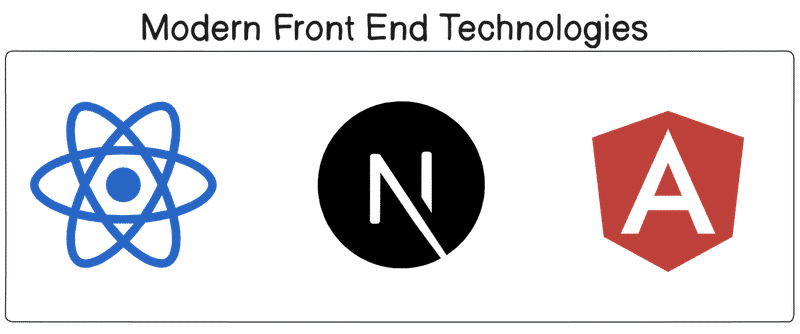
- React.js (Most popular in companies)
- Next.js 16 (Full-stack + server components + SEO)
- TypeScript (Highly recommended for jobs)
- Angular (Used in Most Google Products as it was made by them)
Key Skills:
- Components, hooks, state management
- Routing and API fetching patterns
- TailwindCSS or Material UI for faster UI development
- Performance and accessibility optimizations
Resource: You can master these technologies easily from any One Shot Youtube Tutorial or Udemy Courses.
4. Learn Server-Side Development
Choose one backend path to start:
| Language | Framework |
|---|---|
| JavaScript | Node.js + Express.js or NestJS |
| Python | Django or FastAPI |
| TypeScript Full-stack | Next.js Server Actions |
| Java | Spring & Spring Boot |
Essential Topics:
- REST APIs
- Authentication and Authorization
- Error-first API design
- File uploads and email services

Resource: If you want to go with JavaScript Backend then you can checkout this article: Node JS For Begineers
5. Databases: SQL + NoSQL
Learn both based on use-case:
| Type | Example | Strength |
|---|---|---|
| SQL | PostgreSQL, MySQL | Relationships, transactions |
| NoSQL | MongoDB | Flexible schema and scalability, Faster READ opeartion than SQL and highly scalable |
Important databases concepts:
- CRUD Operation
- Indexing
- Joins and aggregation
- Normalization where needed
- ORM tools like Prisma(SQL & NoSQL) or Mongoose(NoSQL)

Resource: If you want to Lean about SQL Databases like MySQL, you can checkout this article: MySQL For Begineers
6. Deployment and Cloud Skills
Deployment is one of the most underrated skills in full-stack development, yet it is the skill that immediately separates beginners from job-ready developers. Companies need developers who can take an application from “works on my machine” to “live on the internet”. That’s where deployment knowledge becomes essential.
Start with modern hosting platforms like Vercel, because it integrates smoothly with React and Next.js applications. These platforms abstract away server management, letting you focus on building features. As you progress, explore alternatives like Render, Railway, and Netlify—each of them offers free tiers, quick deployments, and automatic CI/CD pipelines.
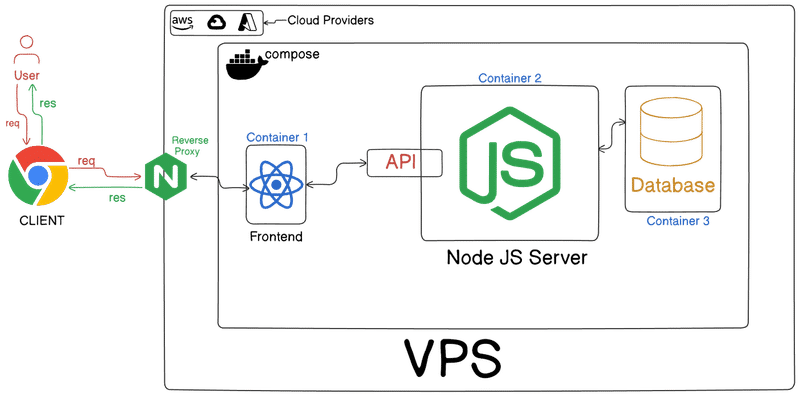
To go deeper into real production environments, learn the basics of Docker. Understanding how to containerize your application helps you maintain consistent environments across development, staging, and production. This is a skill recruiters love because it shows “production-level thinking.”
You should also practice Linux fundamentals, especially file navigation, permissions, logs, and system processes. Pair this with learning how to configure an Nginx reverse proxy—a common requirement in scalable backend setups.
7. AI Landscape in 2026: A Strong Advantage
The role of AI in software development has evolved rapidly. In 2026, AI tools are not just optional—they are standard tools in a developer’s workflow. AI can speed up your development significantly by helping with bug detection, boilerplate generation, documentation, and even suggesting test cases.
However, AI systems still lack the deep contextual understanding that humans possess. They cannot accurately judge what aligns with user needs, business goals, or long-term product strategy. They also struggle with intuitive UI and UX decisions, creative problem-solving, and architecture planning.
This means developers who know how to use AI effectively will consistently outperform those who don’t. Use AI to automate repetitive tasks such as writing utility functions or generating component skeletons, but always ensure the final design and logic is crafted by you.
The truth is simple: AI-enhanced developers are now the highest-paid developers.
8. Most Important Part: Build Projects That Recruiters Love
Projects are your biggest leverage in landing interviews—far more powerful than theoretical knowledge. Hiring managers don’t want to hear what you “know”; they want to see what you can build.
Aim to create at least 5–7 production-quality projects, each showcasing a different part of your skillset. For example:
- A Blog CMS highlights CRUD skills, authentication, routes, and dashboards.
- An E-Commerce Store proves you can integrate payments, manage products, and handle cart logic.
- A Real-Time Chat App demonstrates your understanding of WebSockets, live notifications, and user presence.
- A Social Media Feature Set (likes, comments, notifications) displays experience with relational data and event-driven systems.
- An AI-Powered App shows your ability to integrate modern LLM APIs, which gives you a competitive edge.
Once you deploy your projects, make sure to include documentation and detailed write-ups. This builds trust and showcases your communication skills, which are highly valued.
Demonstrate Your Skills Directly On This Website
Instead of only reading tutorials or roadmaps, start showing your skills publicly. This platform gives you the ability to:
- Create an account and personalize your profile
- Write and publish technical blogs from your dashboard
- Display your knowledge to recruiters looking for proof of your skills
Your blog becomes more than content—it becomes your live portfolio.
Ask yourself: Why would a company choose a candidate who only claims to know full-stack development when another candidate proves it through real articles, projects, and case studies?
Show. Don’t just tell.
How To Become the Best Developer in the AI World
Winning as a developer in an AI-driven future is simple if you follow the right principles.
First, build a strong foundation by understanding why things work the way they do—not just copying code from AI tools. Use AI to speed up low-value tasks, but own the architecture and logic.
Second, develop the ability to debug, optimize, and scale applications. These skills separate juniors from real full-stack engineers.
Third, pick real-world problems and build products that solve them. This shows ownership and entrepreneurial thinking.
Fourth, improve your communication skills. Write technical articles, document your projects, and contribute to discussions. Developers who can explain complex ideas get hired faster.
The best-paid developers are not just coders. They are problem solvers, builders, and communicators.
6-Month Job-Oriented Learning Plan
Here’s a realistic roadmap to become employable in six months:
Months 1–2: Core Foundations
Focus on HTML, CSS, JavaScript, Git, and basic responsive design. Build mini-projects to strengthen fundamentals.
Month 3: Modern Frontend
Learn React + TypeScript. Build 2–3 solid projects showcasing components, hooks, and routing.
Month 4: Backend and Database
Learn Node.js, Express, MongoDB/PostgreSQL. Build APIs, authentication, and CRUD operations.
Month 5: Cloud and Deployment
Learn deploying to Vercel, Render, Docker basics, and CI/CD. Deploy all your projects.
Month 6: Final Projects + Job Preparation
Build 2 major portfolio projects. Write blogs about them. Start reaching out to recruiters.
This plan maximizes project output and minimizes wasted time.
Conclusion: Your Future Starts Right Now
You’re at a turning point. You can scroll to the next article… or you can take the first step toward your developer career today.
If you gained value from this guide:
- Comment your full-stack learning goals
- Publish your first blog on this platform
- Share this roadmap with other learners
Every great developer journey begins with one line of code. Your next project could be the one that gets you hired.
What will you build next?
